
Success Cases
Manufacturing Robust PCBA for Industrial Control Switches (FR4 2-Layer)
Runhi produced robust PCBA for Industrial Control Switches using FR4 2-Layer tech. Our mixed assembly ensures reliability for relays and terminals.
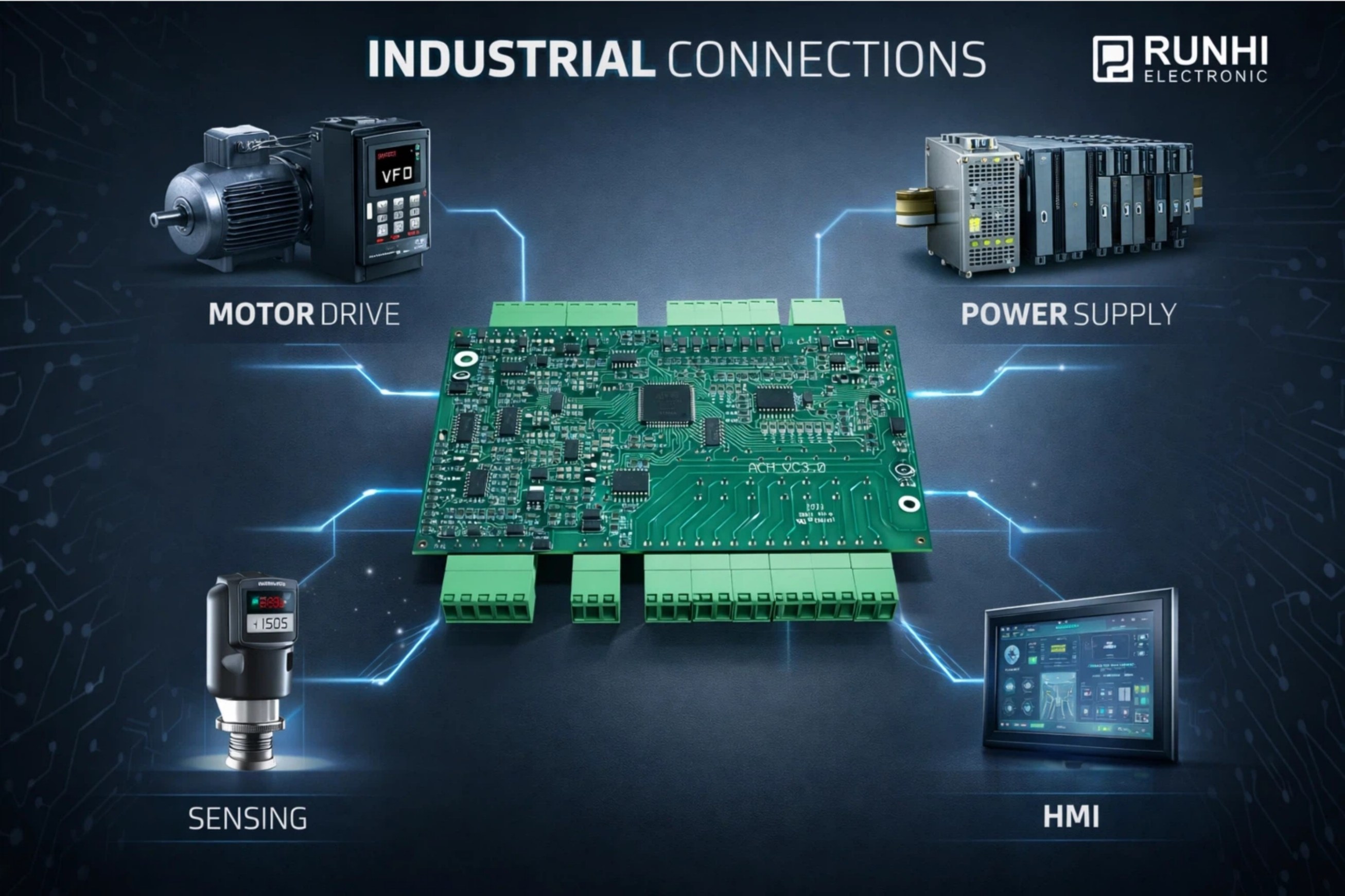
In industrial automation, the reliability of a control switch depends entirely on the quality of its internal circuit board. Even a standard FR4 2-Layer PCB requires precise engineering to handle the harsh demands of industrial environments.
Recently, Runhi Electronic successfully manufactured and delivered a batch of Main Control PCBA Boards for an industrial switching application. This project demonstrates our expertise in Mixed Technology Assembly—combining high-precision SMT with rugged Through-Hole components.
Technical Highlights: Built for Durability
1. Robust Power Switching Design
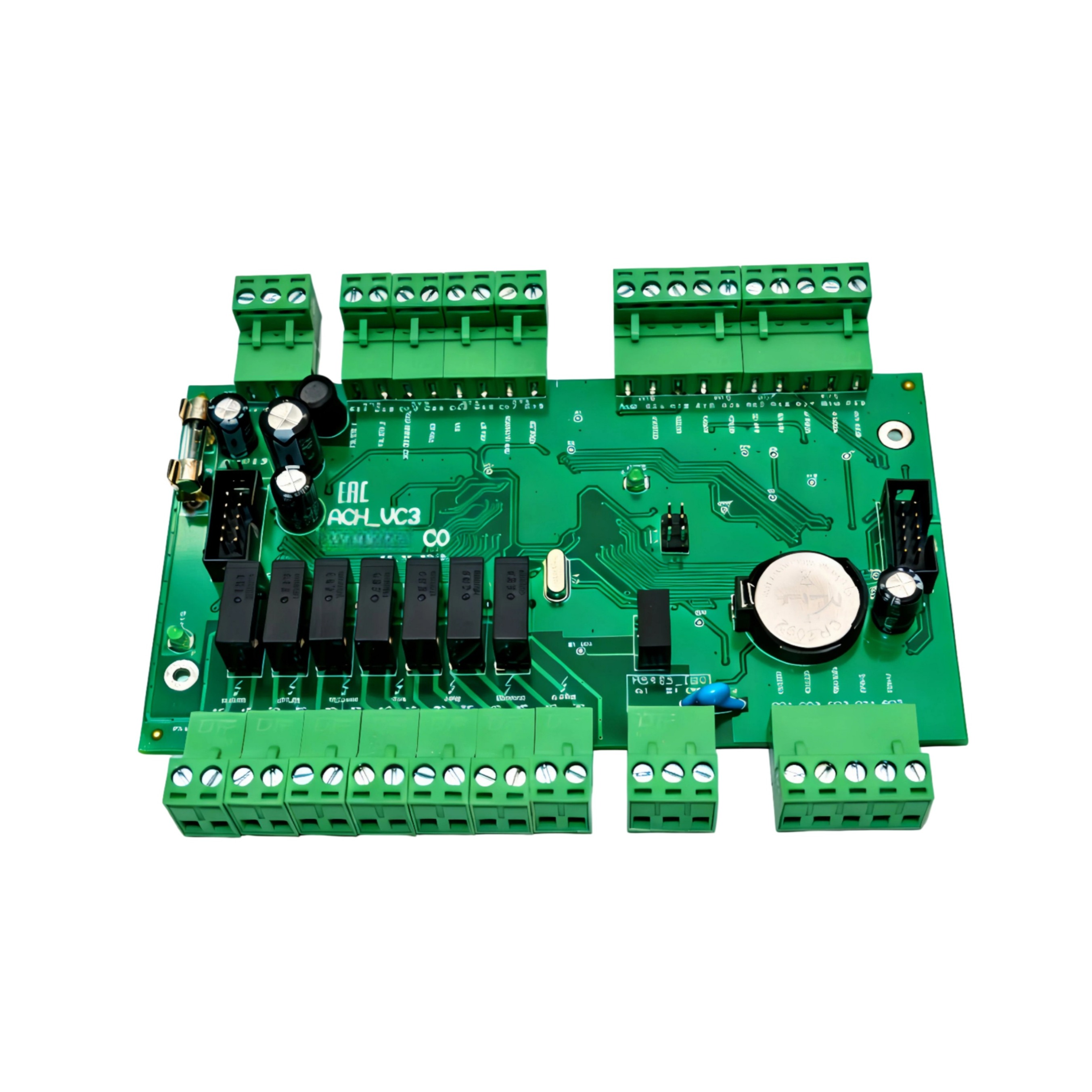
The top side of the board features multiple High-Current Power Relays.
- Manufacturing Focus: Since these relays switch high loads frequently, the soldering quality is critical. Runhi utilized Wave Soldering with strictly controlled temperature profiles to ensure consistent solder penetration in the plated through-holes (PTH). This guarantees that the relays remain electrically stable even under constant vibration.
2. Mechanical Strength for Field Wiring
The board is equipped with banks of Pluggable Terminal Blocks for external connections.
- Manufacturing Focus: Industrial technicians often apply significant torque when tightening wires. We ensured that the mechanical bonds of these connectors to the FR4 2-Layer base were reinforced, preventing any pad lifting or cracking during field installation.
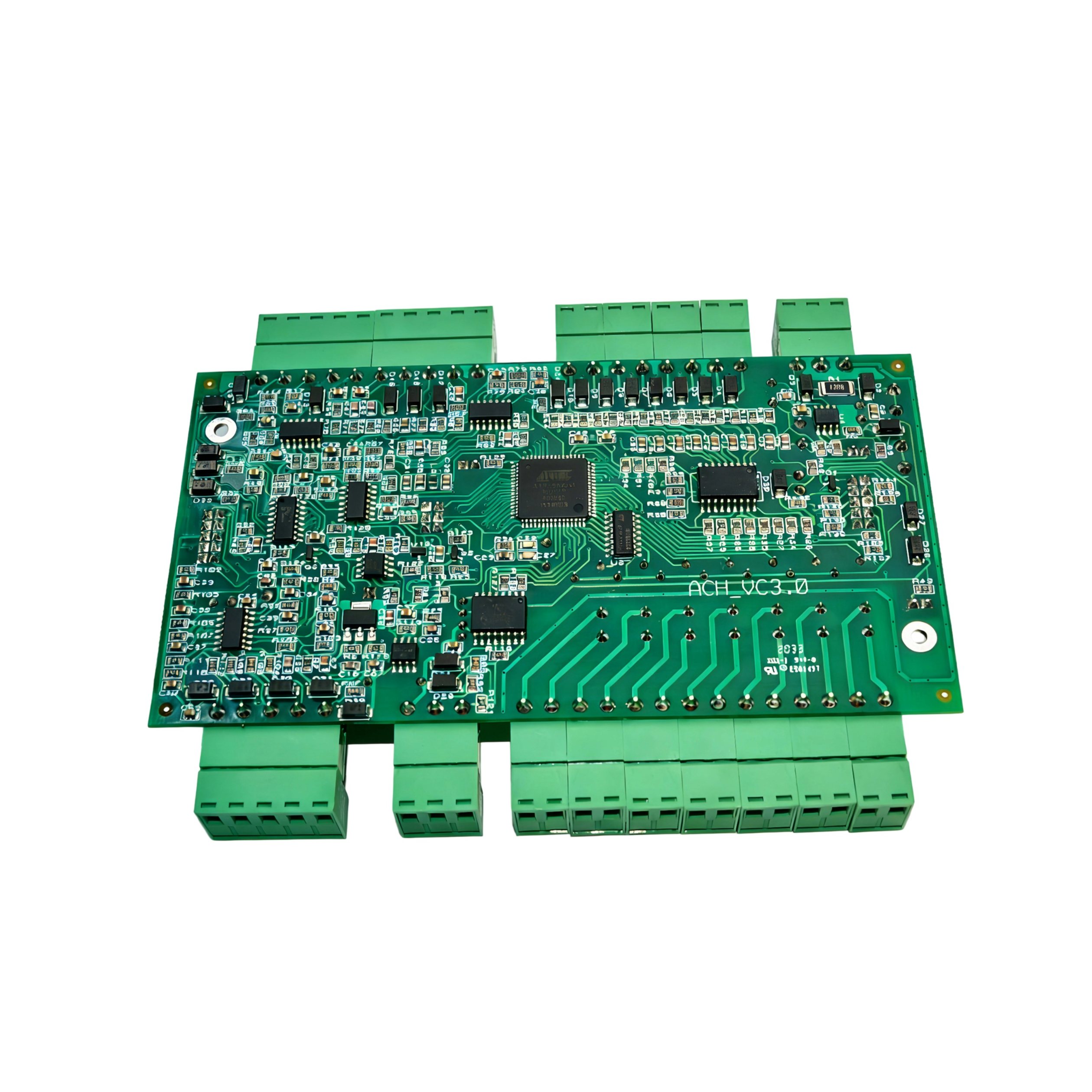
3. Precision Logic Control (SMT)
While the top side handles power, the bottom side handles logic. It is populated with a Microcontroller Unit (MCU) and high-density passive components.
- Manufacturing Focus: Despite the board's heavy-duty nature, the logic circuit requires precision. Our SMT lines accurately mounted the fine-pitch MCU and small chip resistors, verified by AOI (Automated Optical Inspection) to catch any bridging or cold solder joints.
Why Choose Runhi for Your Industrial PCBA?
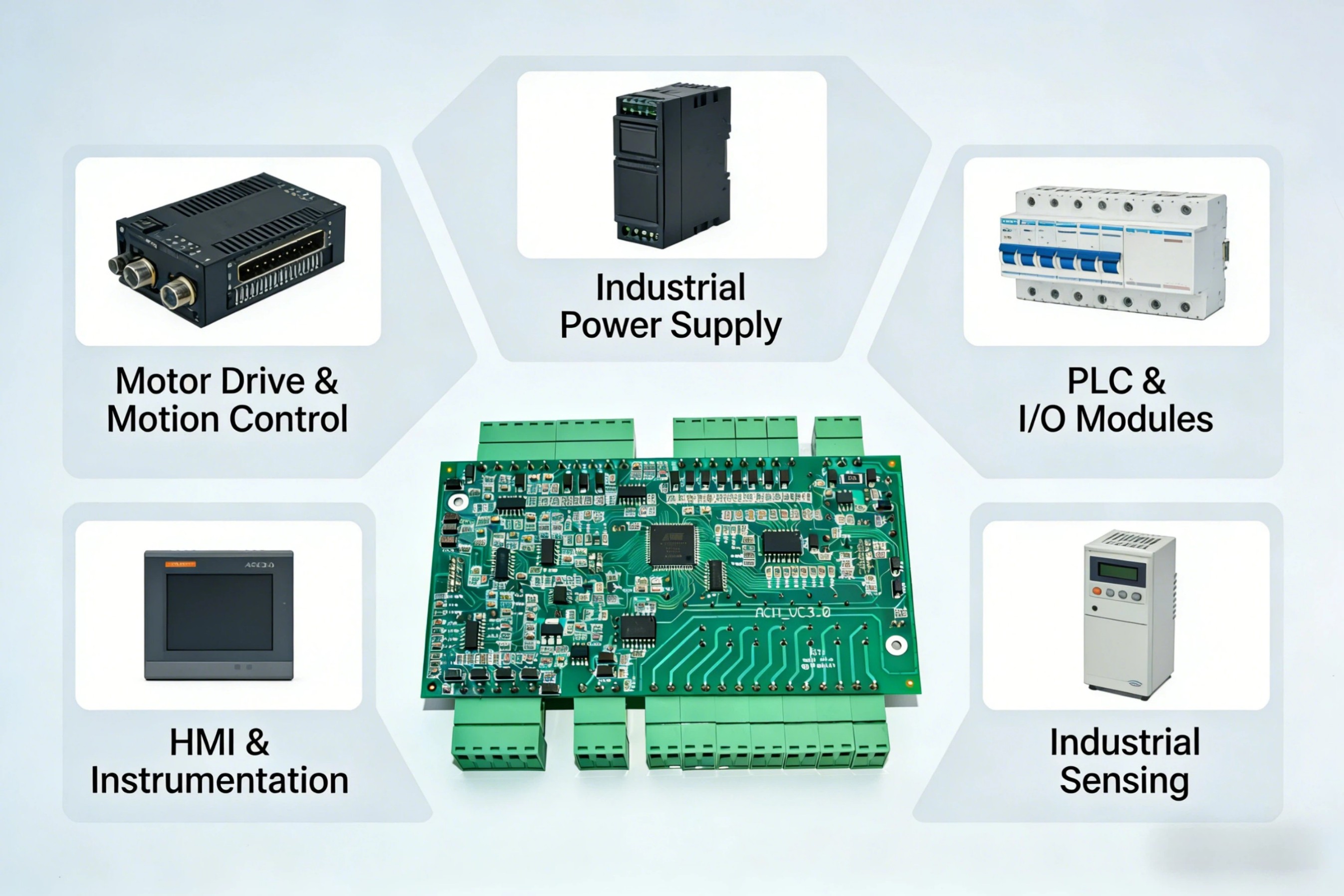
We understand that for industrial equipment, "Reliability" is the only metric that matters.
- Standard FR4, Industrial Quality: We deliver IPC Class 2 standard quality even on cost-effective 2-layer FR4 boards.
- Comprehensive Testing: From visual inspection to functional testing support, we ensure every board leaving our factory is ready for the field.
Frequently Asked Questions
Is FR4 2-layer a sensible choice for industrial control boards?
For many control switches and relay boards it is: standard FR4 keeps cost under control while a 2-layer layout stays simple to route and inspect. We build these boards to IPC Class 2 quality, with base materials from normal Tg to high Tg FR4.
How do you solder heavy through-hole parts such as relays and terminal blocks?
Through-hole components are processed on our automatic DIP lines and wave soldering equipment under strictly controlled thermal profiles, supporting solid barrel fill and the mechanical strength needed for high-torque field wiring.
What inspection does an industrial PCBA go through at RUNHI?
Boards pass IQC, SPI, AOI, X-Ray, and functional testing on dedicated fixtures, with visual inspection plus FQC and IPQC checkpoints before packing, all under ISO 9001-certified quality management.