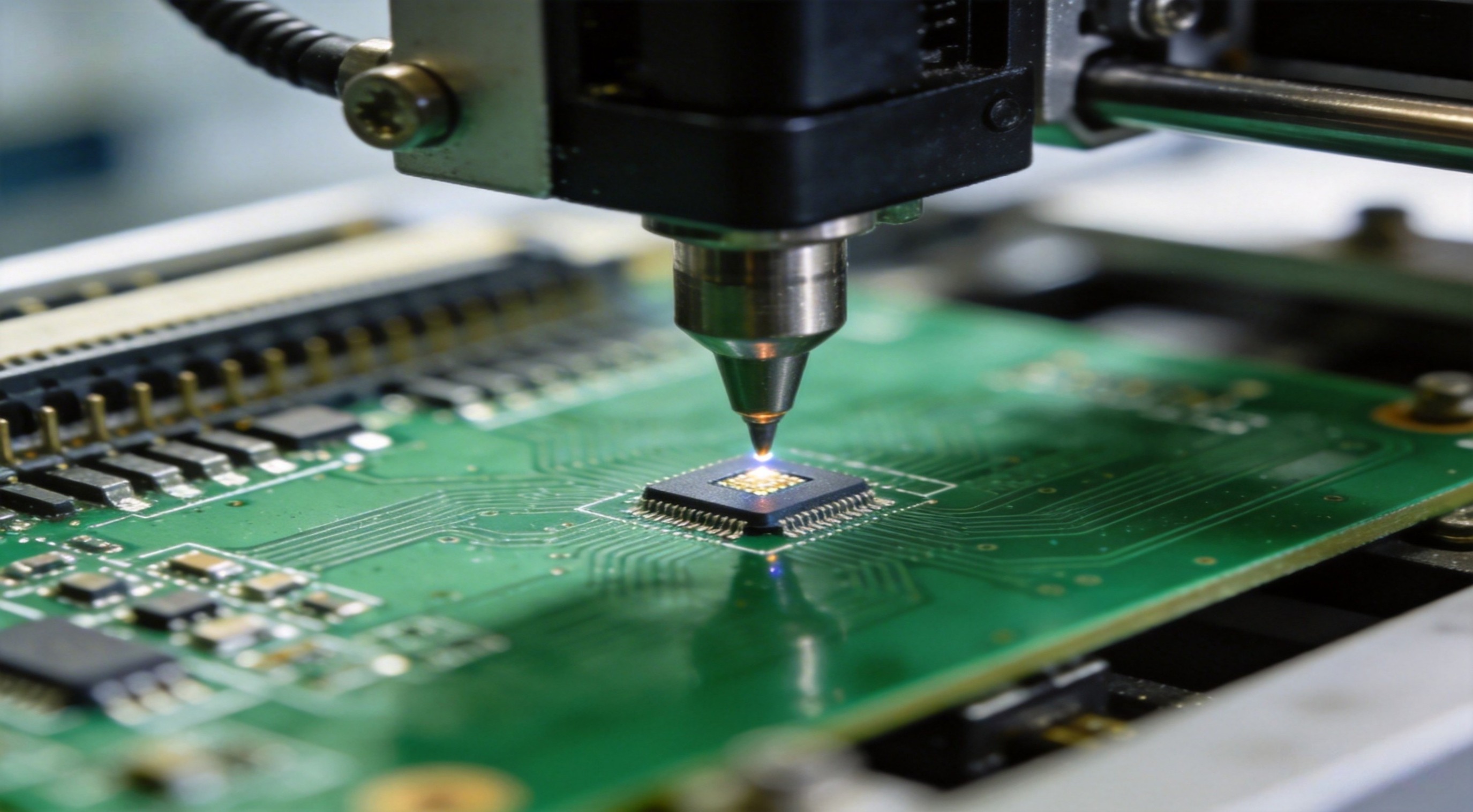
SMT PCB Assembly
Premier SMT PCB Assembly Services
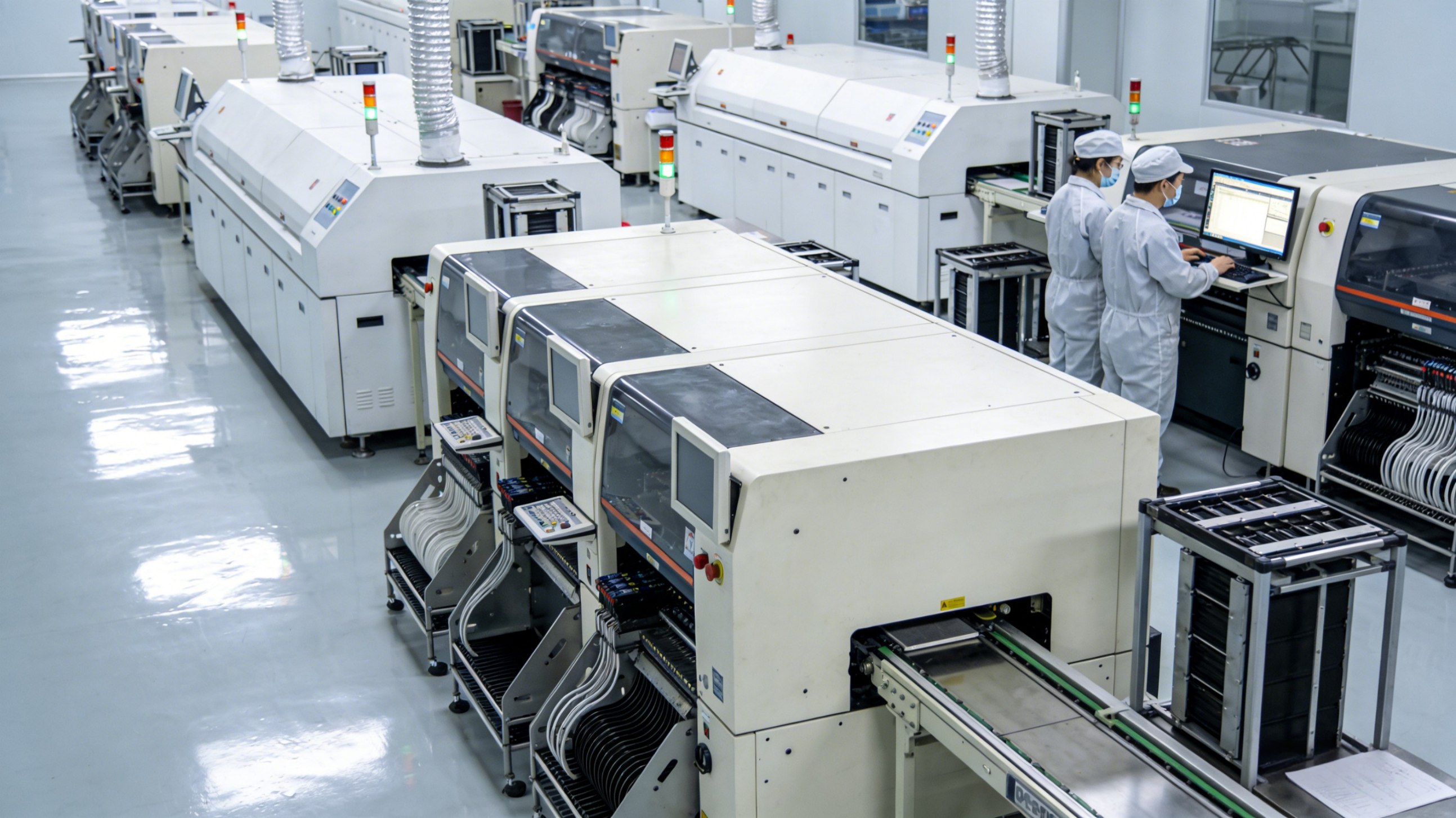
Runhi Electronic delivers industry-leading Surface Mount Technology (SMT) solutions. Equipped with advanced automated lines, we handle everything from microscopic 0201 passives to complex BGA/CSP components. Whether you need a quick-turn prototype in 24 hours or high-volume mass production, our ISO-certified process ensures speed, precision, and zero-defect reliability.
What is SMT Assembly?
Surface Mount Technology (SMT) Assembly is the modern standard for electronic manufacturing. Unlike older Through-Hole Technology (THT), SMT involves mounting electronic components directly onto the surface of the Printed Circuit Board (PCB).
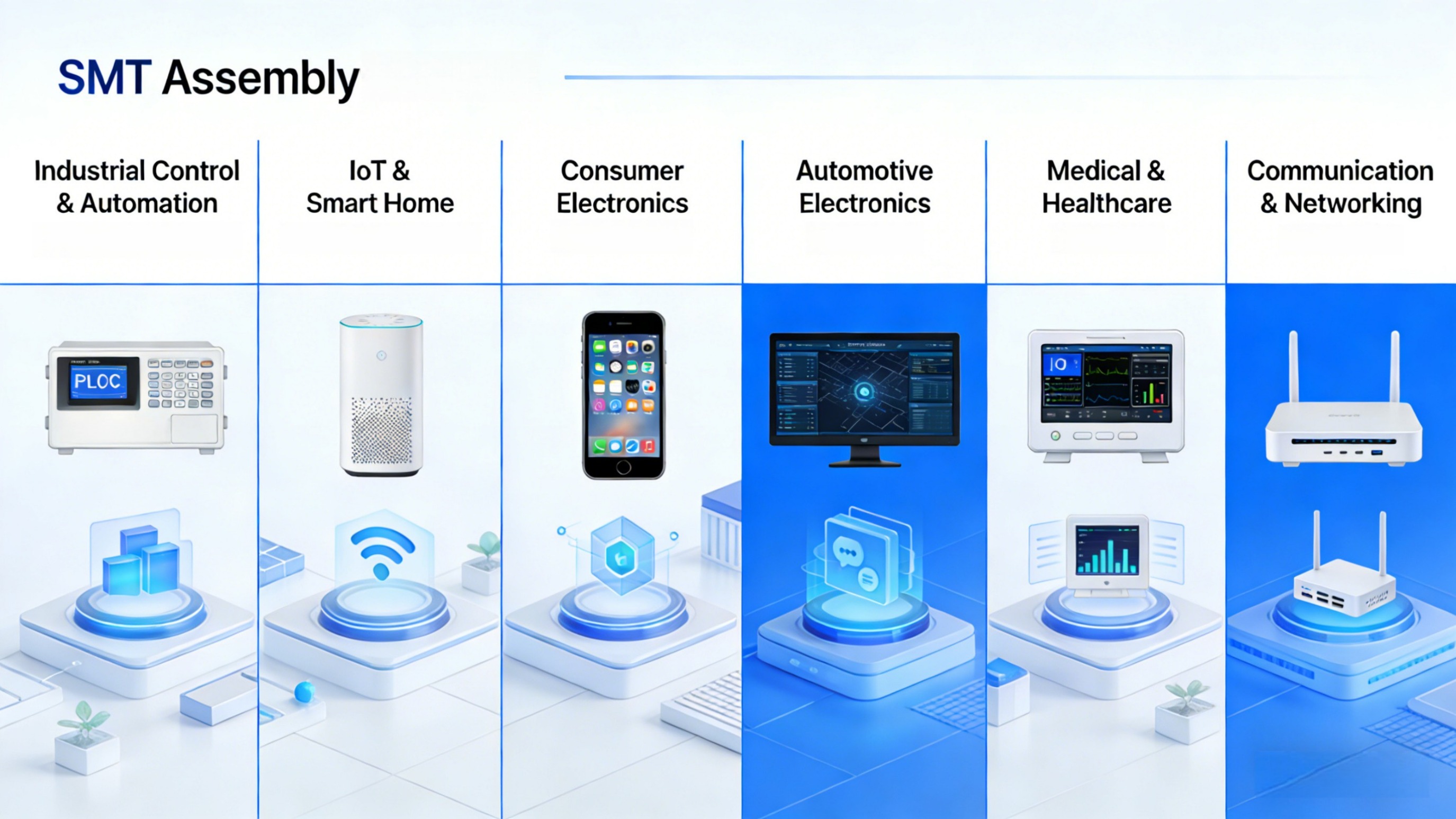
At Runhi Electronic, SMT is the backbone of our manufacturing operations. This technology allows for components to be placed at high speeds with extreme precision, enabling the production of smaller, lighter, and more complex electronic devices. From consumer gadgets to industrial controllers, our SMT process turns your design files into functioning reality.
The Benefits of SMT Assembly
Why do leading OEMs prefer SMT for their PCBA projects? The advantages are clear:
- Miniaturization & High Density: SMT allows components to be placed closer together on both sides of the board, significantly reducing PCB size and weight. Perfect for IoT and wearable devices.
- Better Electrical Performance: Shorter leads and closer component placement reduce parasitic inductance and resistance, ensuring better signal integrity for high-frequency applications.
- Cost-Effectiveness: Our automated pick-and-place machines can mount thousands of components per hour, drastically lowering labor costs and unit prices for mass production.
- Reliability: Automated assembly reduces human error. With consistent solder joints, SMT boards offer superior resistance to vibration and mechanical stress.
SMT Assembly Process
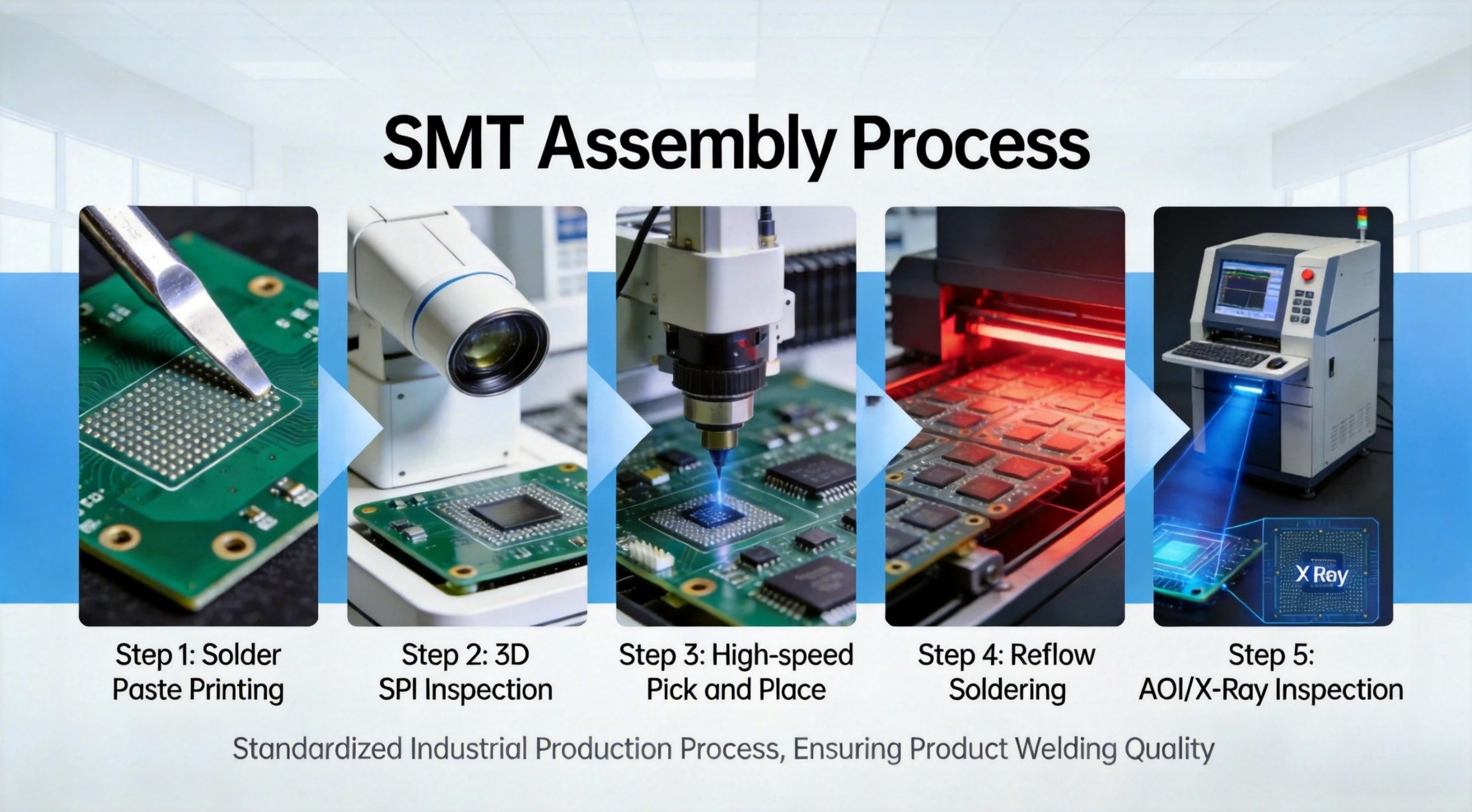
Quality is engineered into every step of our workflow. Runhi follows a strict Closed-Loop Manufacturing Process:
- Solder Paste Printing: We use high-precision stencils to deposit the exact amount of solder paste onto the PCB pads.
- Solder Paste Inspection (SPI): Before mounting, 3D SPI machines inspect the paste height and volume to prevent soldering defects at the source.
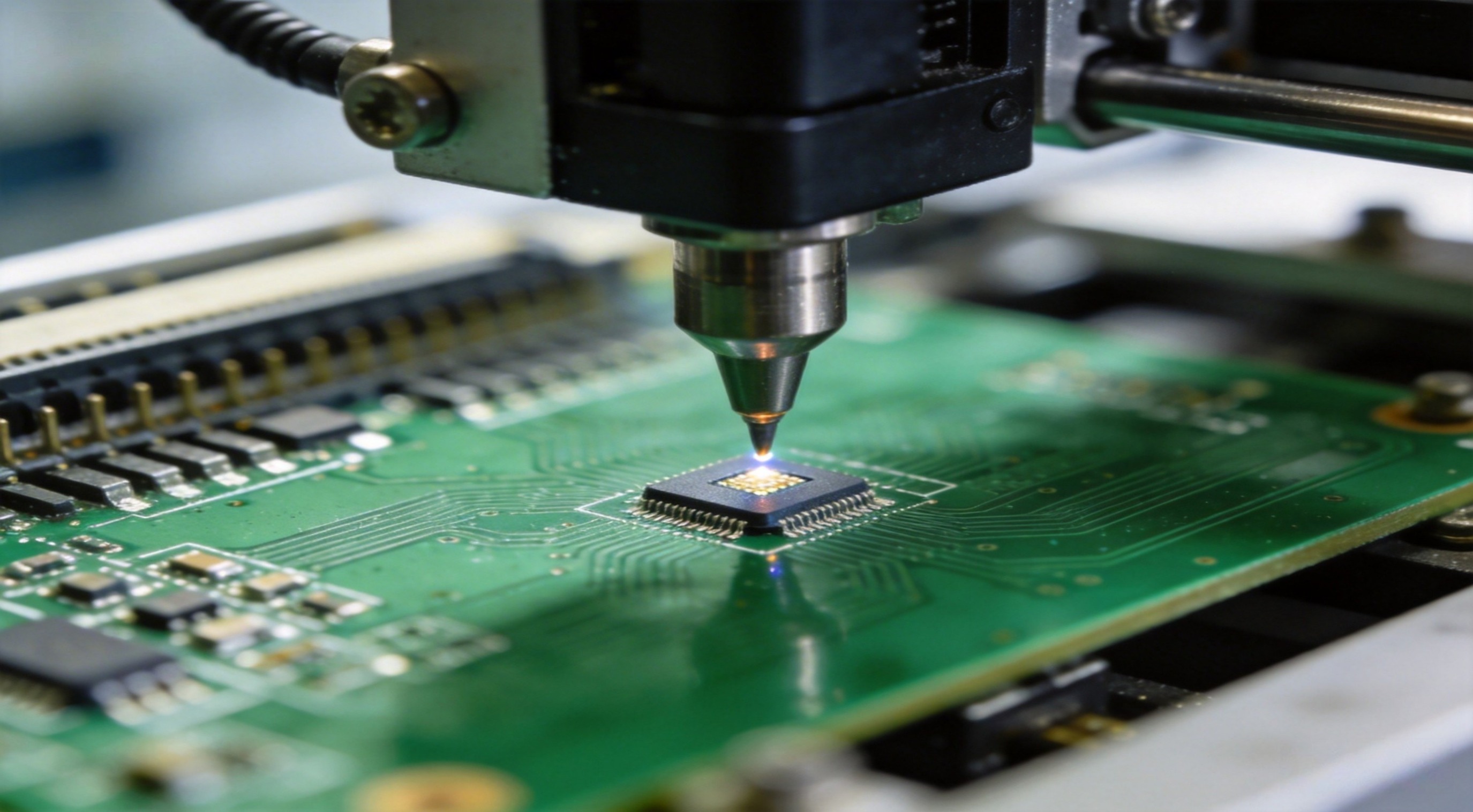
- Pick & Place: Advanced Yamaha/Juki mounters place components with micron-level accuracy, handling everything from 0201 passives to complex ICs.
- Reflow Soldering: The boards pass through a 10-zone nitrogen reflow oven. The controlled thermal profile ensures optimal wetting and strong solder joints.
- AOI & X-Ray Inspection: We perform 100% Automated Optical Inspection (AOI) to check for alignment and soldering issues. For BGA/QFN components, X-Ray is used to detect hidden voids.
SMT Assembly Capability
We continuously upgrade our equipment to handle the most challenging designs.
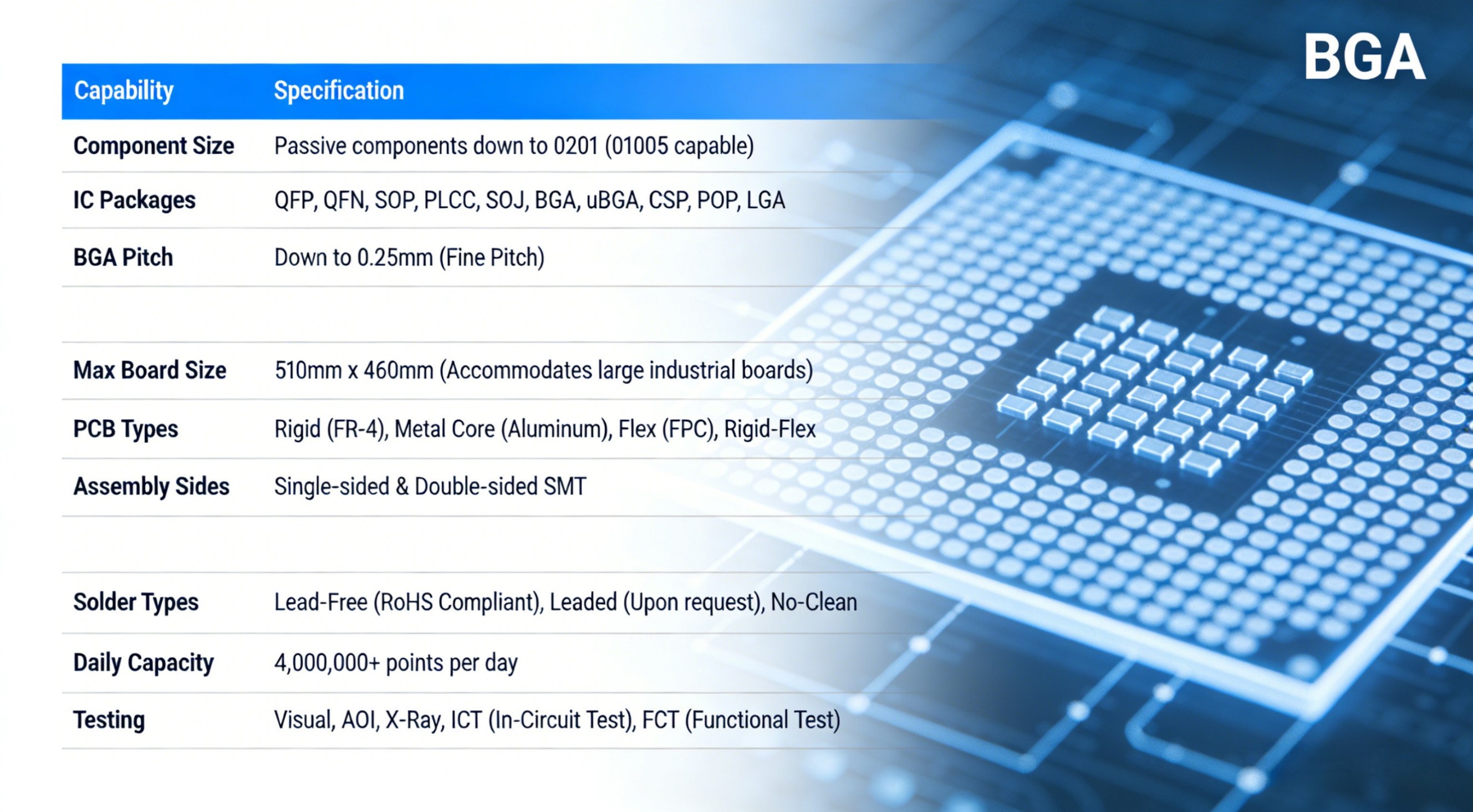
Capability | Specification |
Component Size | Passive components down to 0201 (01005 capable) |
IC Packages | QFP, QFN, SOP, PLCC, SOJ, BGA, uBGA, CSP, POP, LGA |
BGA Pitch | Down to 0.25mm (Fine Pitch) |
Max Board Size | 510mm x 460mm (Accommodates large industrial boards) |
PCB Types | Rigid (FR-4), Metal Core (Aluminum), Flex (FPC), Rigid-Flex |
Assembly Sides | Single-sided & Double-sided SMT |
Solder Types | Lead-Free (RoHS Compliant), Leaded (Upon request), No-Clean |
Daily Capacity | 4,000,000+ points per day |
Testing | Visual, AOI, X-Ray, ICT (In-Circuit Test), FCT (Functional Test) |
Why Choose RUNHI as your SMT Assembly Supplier?
Selecting an EMS partner is about trust. Here is why global clients choose Runhi Electronic for their SMT needs:
🚀 20+ Years of Experience (Since 2004)
We are not just a factory; we are industry veterans. With two decades of experience, our engineering team optimizes your design for manufacturing (DFM) before production begins, identifying potential issues to save you time and money.
🌍 One-Stop Supply Chain Advantage
Runhi solves the biggest headache in manufacturing: Component Sourcing. We leverage our global network to source original parts from authorized distributors (Digi-Key, Mouser, Arrow). No more delays due to missing chips—we handle the BOM so you don't have to.
🛡️ Certified Quality Control
We operate under strict ISO 9001:2015 standards. From incoming material inspection (IQC) to final quality assurance (FQA), every board is traceable. Our commitment to IPC Class 2 & 3 standards means you receive boards that work right the first time.
⚡ Flexibility: From Prototype to Mass Production
Whether you need 5 prototype boards in 24 hours or 50,000 units for a global launch, Runhi scales with you. No Minimum Order Quantity (MOQ) ensures we are the right partner for every stage of your business growth.
SMT Assembly FAQs:
- Service & Supply Chain
Q: Do you offer Full Turnkey SMT services?
A: Yes, Turnkey PCBA is our specialty. Runhi Electronic handles the entire process: PCB fabrication, component sourcing, and final assembly.
- Benefits: You deal with one vendor, save on shipping, and leverage our supply chain for better component pricing.
- Note: We also support Partial Turnkey (you supply some parts) and Consigned (you supply all parts) models.
Q: Is there a Minimum Order Quantity (MOQ) for SMT assembly?
A: No, we do not have a strict MOQ. We support you at every stage:
- Prototyping: 1-10 pieces for design verification (NPI).
- Low-Volume: 100-1,000 pieces for pilot runs.
- Mass Production: 10,000+ pieces for market rollout.
Q: How do you handle component sourcing and shortages?
A: We source components only from authorized distributors (like Digi-Key, Mouser, Arrow, Future) and original manufacturers to guarantee 100% authenticity. If a part is out of stock (EOL or shortage), our engineering team will suggest qualified Cross-References (alternatives) for your approval to keep production on schedule.
2. Technical Capabilities
Q: What is the smallest component size you can assemble?
A: Our advanced Yamaha/Juki lines can handle passive components down to 0201 (Imperial) / 0603 (Metric) as standard. We also have the capability for 01005 chips for high-density designs upon request.
Q: Can you handle BGA, QFN, and fine-pitch components?
A: Absolutely. We specialize in complex IC packages:
- BGA (Ball Grid Array): Down to 0.25mm pitch.
- QFN / CSP / LGA: High-precision placement.
- Fine Pitch Connectors: Down to 0.3mm.
Q: Do you support Double-Sided SMT assembly?
A: Yes. For boards with components on both sides, we typically use a double-reflow process. Heavy components on the bottom side may be secured with Red Glue dispensing to prevent them from falling off during the second pass.
Q: Can you handle Mixed Assembly (SMT + Thru-Hole)?
A: Yes. Most industrial boards require both. We process SMT components first via reflow soldering, followed by THT components via Wave Soldering or Selective Soldering, ensuring thermal safety for all parts.
3. Quality & Testing
Q: How do you ensure the soldering quality of BGA components?
A: Since BGA solder joints are hidden underneath the chip, visual inspection is impossible. We use X-Ray Inspection for 100% of BGA/CSP components to detect voids, bridging, or cold solder joints, ensuring long-term reliability.
Q: What testing methods do you include?
A: Our standard quality process includes:
- IQC: Incoming material check.
- SPI: Solder Paste Inspection (prevents printing defects).
- AOI: Automated Optical Inspection (checks placement & soldering).
- X-Ray: For BGAs.
- FCT (Functional Testing): Optional but recommended. We can build custom test fixtures to verify your board works before shipment.
4. Files & Process
Q: What files do I need to send for an SMT quote?
A: To provide an accurate quote, please provide:
- Gerber Files: (RS-274X format) for PCB fabrication.
- BOM (Bill of Materials): Excel format including Manufacturer Part Number (MPN) and Designators.
- Pick & Place File (Centroid/XY Data): Coordinates for component placement.
Q: What is your standard lead time for SMT assembly?
A:
- Prototypes: 24 to 72 hours (after all parts are ready).
- Volume Production: Typically 2-4 weeks, depending on component availability and quantity.
- Need it faster? Ask about our Expedited Service.