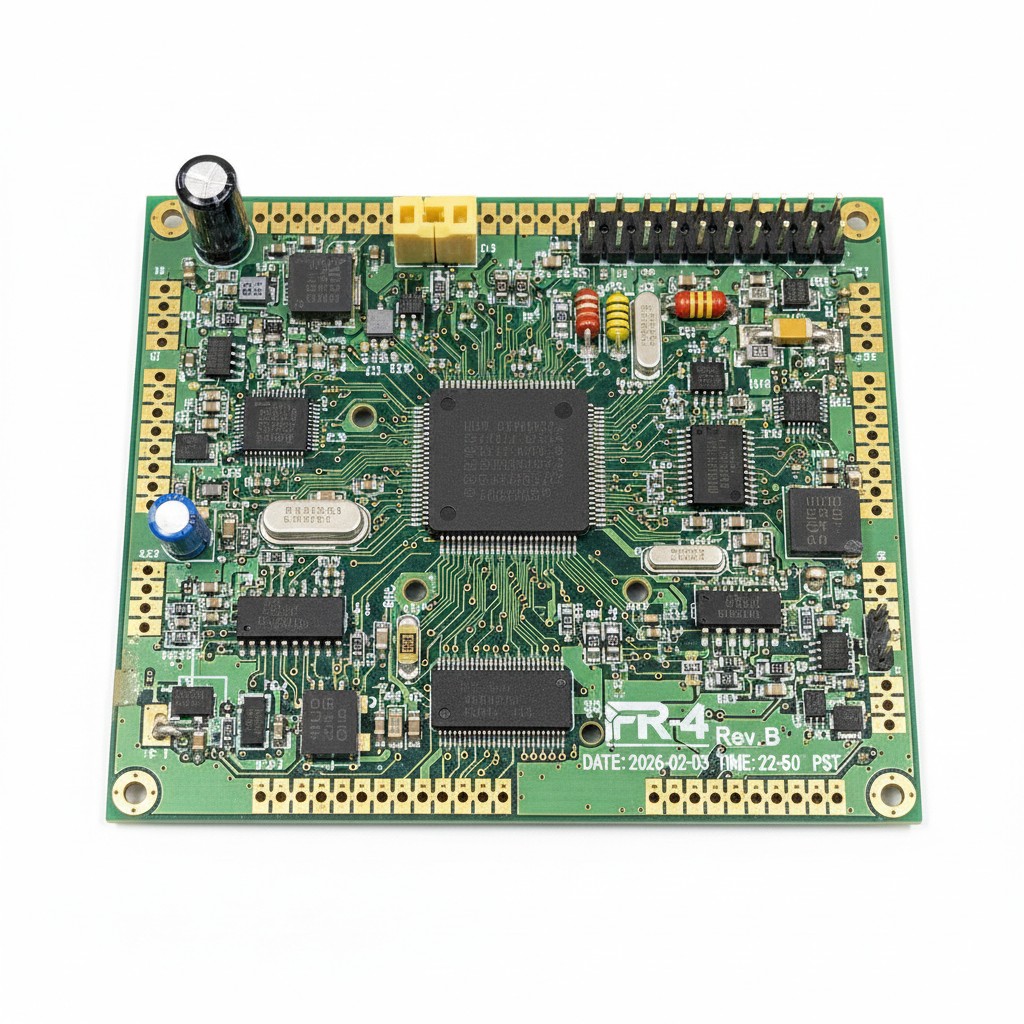
FR-4 PCBs
Reliable FR4 PCBs, Advanced FR-4 PCB Solutions: From Prototype to Mass Production
Flame Retardant 4, or FR4, a material grade used in PCB manufacturing, supporting up to 32 layers with high-precision impedance control. In-house factories and smart manufacturing help reduce costs and boost efficiency.
What is FR-4 PCB?
FR-4 (Flame Retardant Level 4), is a material grade used in PCB manufacturing. It is made of fibreglass and "4" represents the UL94 V-0 flammability standard (it must self-extinguish after being ignited).
It represents a composite material composed of woven fiberglass cloth with an epoxy resin binder that is flame resistant (self-extinguishing). Because of its excellent balance of mechanical strength, electrical insulating qualities, and cost-effectiveness, FR-4 has become the standard substrate for the vast majority of Printed Circuit Boards (PCBs) globally, ranging from simple single-sided boards to complex multilayer designs.
Feature | Capability Specification |
Layer Count | 1 - 32 Layers |
Material Types | Standard Tg, High Tg (150/170/180), Halogen-Free |
Max Board Size | 500mm x 1200mm (Customizable) |
Dimension Tolerance | ±0.1mm(Precision) and ±0.2mm(Regular) for CNC routing, and ±0.4mm for V-scoring |
Drill Diameter | 1-layer: 0.3 – 6.3 mm
2-layer: 0.15 – 6.3 mm
Multilayer: 0.15 – 6.3 mm |
Surface Finishes | HASL, ENIG, OSP |
Copper Weight | 0.5oz - 4.5oz |
Board Thickness | 0.4 mm – 4.5 mm |
FR4 Material Overview
FR4 represents flame-retardant grade 4 glass-reinforced epoxy laminate. The material's dielectric constant and dissipation factor (loss tangent) are moderate. FR4 can be used in low-speed and high-power applications, making it the first choice for many hobbyists. This makes it suitable for general-purpose electronic designs.
Dielectric constant: around 4.5 at 1MHz (moderate). Loss tangent: around 0.02 at 1MHz (moderate). The glass transition temperature (Tg) determines how the material behaves under heat. It is one of the most important thermal properties in the classification of FR4 materials.
- Low Tg (130–140°C): best for Basic consumer electronics, Toys, Single/Double-sided boards.
- Standard Tg (150–160°C): best for Computers, Instrumentation, Office equipment, Mid-range industrial controls.
- High Tg (>170°C): best for Automotive electronics (engine control), HDI PCBs, Aerospace, High-power LED lighting, and Telecommunications.
The Benefits of FR-4 PCB
- Cost-Effective and Widely Available: FR-4 is affordable compared to advanced laminates like Rogers. Its low cost makes it popular and the industry standard for most applications. It is globally available, making it easy to source for large production volumes.
- Moisture Resistance: With near-zero water absorption, it maintains high electrical insulation properties even in humid environments.
- Good Mechanical Strength: The woven fiberglass provides higher tensile strength, making it more resistant to warping, bending, and mechanical stress.
- Reliable Electrical Insulation: Due to a moderate dielectric constant, it is excellent for low-frequency and higher-power applications. Additionally, the epoxy-fiberglass structure offers higher signal isolation.
4. Common Applications of FR-4 PCB
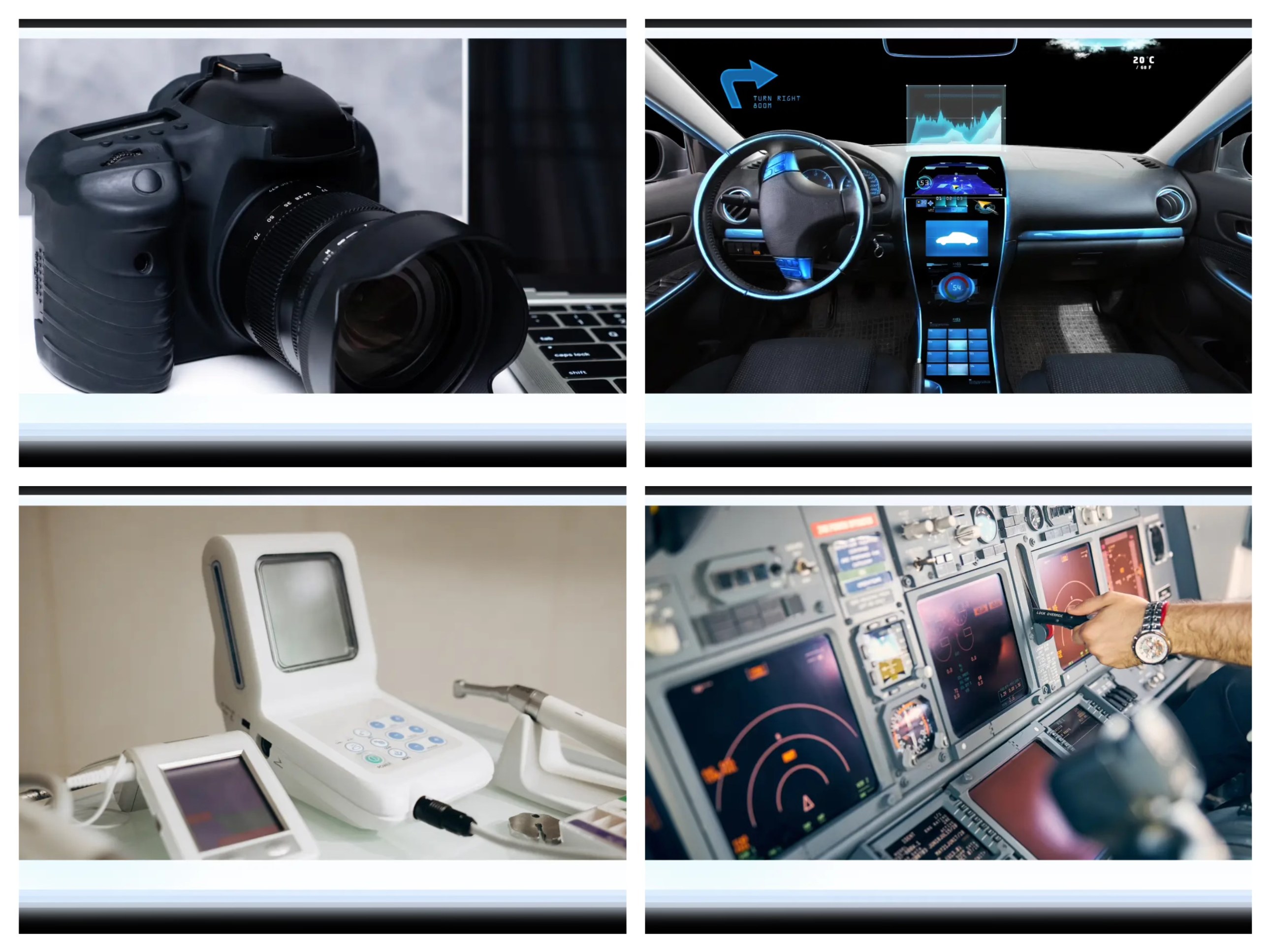
Due to its versatility, FR-4 PCB covers almost every industry sector:
- Consumer Electronics: Smartphones, Laptops, Smartwatches, Home Appliances.
- Industrial Control: Power supplies, Automated machinery, Instrumentation.
- Automotive: Dashboard electronics, Sensors, Navigation systems, Infotainment.
- Telecommunications: Routers, Servers, Antennas, Communication base stations.
- Medical Devices: Monitoring equipment, Diagnostic imaging tools.
Why Choose RUNHI as Your FR-4 PCB Manufacturer?
At RUNHI, we don't just manufacture PCBs; we provide reliability. With years of experience in FR-4 fabrication, we handle everything from quick-turn prototypes to high-volume mass production.
Our Core Advantages:
- Extensive Capability: Supports 1–32 layers, board thickness from 0.2mm to 3.2mm, and copper weights up to 3oz.
- Quality Assurance: Certified by ISO9001 and UL, ensuring every board meets IPC Class 2 or Class 3 standards.
- Material Sourcing: We partner with top-tier laminate suppliers (such as Shengyi, Kingboard, Rogers) to ensure raw material stability.
- One-Stop Solution: Seamless transition from PCB fabrication to Component Sourcing and PCB Assembly (PCBA).
- Fast & Global Delivery: Prototypes in as fast as 3 business days, shipped to over 200 countries worldwide.