Rigid-Flex PCB
Rigid-Flex PCB Manufacturing
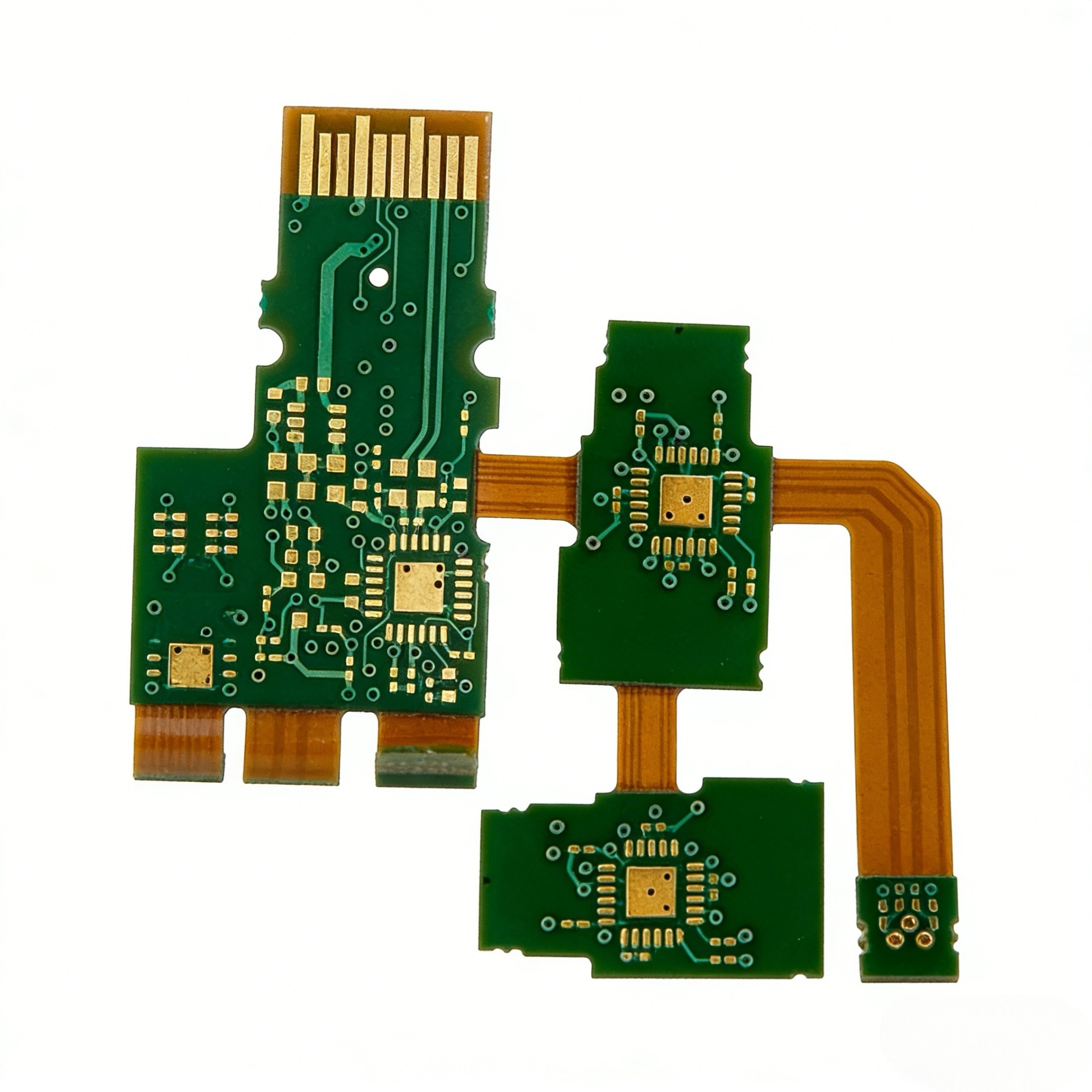
High-quality HDI Rigid Flex PCB, combining rigid and flexible board technology. The board features microvias, blind and buried vias and can accommodate very fine line and spacing designs with excellent signal integrity. Perfect for space-saving designs but requiring superior performance such as smartphones and tablets, medical devices and wearables. Supports custom designs, fast prototyping, and mass production. All items are RoHS and ISO certified and undergo thorough testing before shipping.
What is Rigid-Flex PCB?
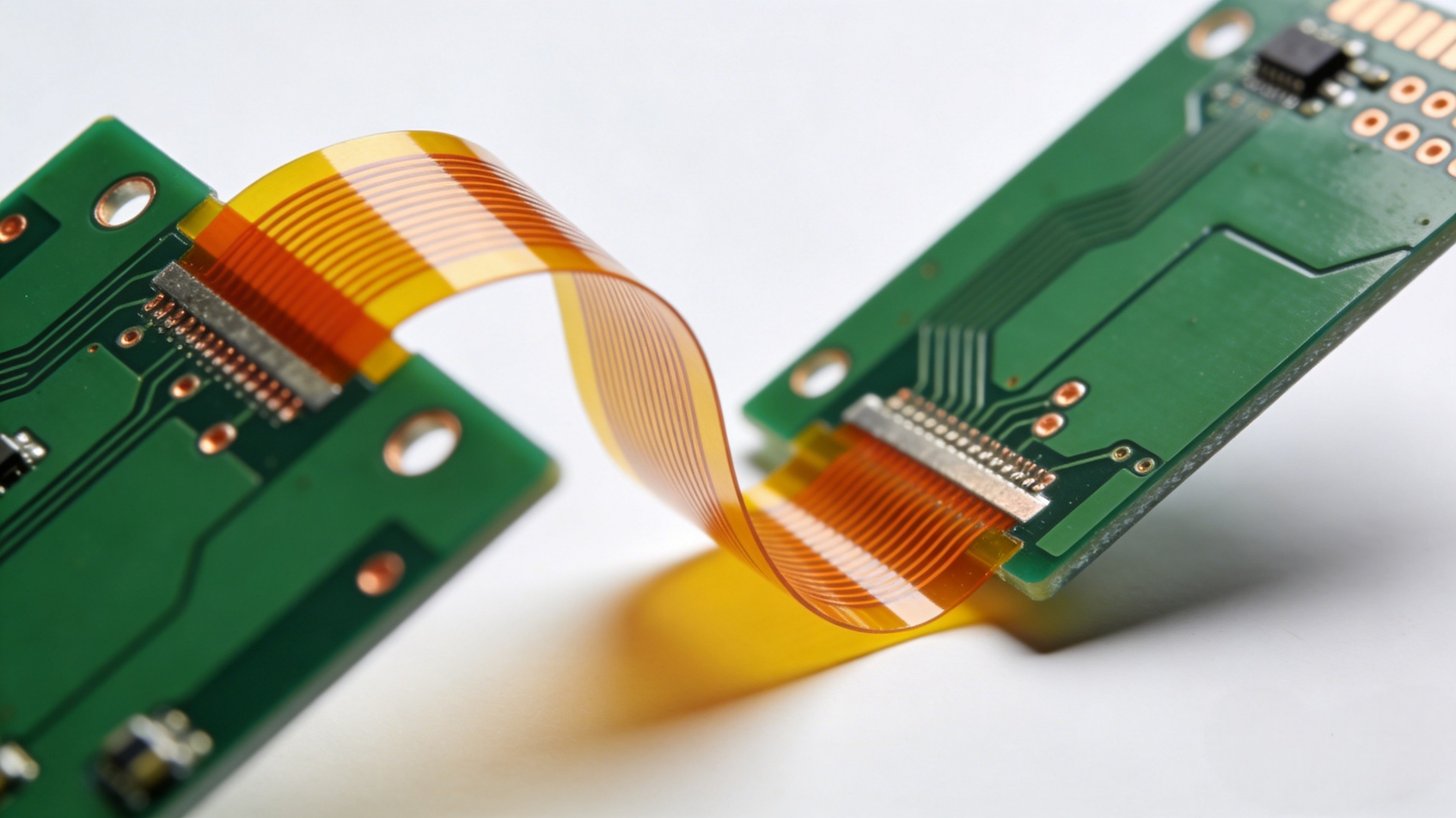
Rigid-Flex PCB is a hybrid circuit board that combines the best attributes of both rigid (FR-4) and flexible (Polyimide) substrates into a single, integrated unit.
Unlike a simple assembly where a flex cable is plugged into a rigid board, a Rigid-Flex PCB is permanently laminated together. The circuits extend continuously from the rigid section through the flexible section via Plated Through Holes (PTH). This creates a seamless 3D interconnect system that eliminates the need for bulky connectors and wire harnesses.
Types of Rigid-Flex PCB
At RUNHI, we engineer Rigid-Flex solutions ranging from simple to highly complex HDI structures:
- Standard Construction: Consists of a single flexible layer (or dual-sided flex) sandwiched between rigid FR-4 layers. The most common and cost-effective type.
- Multi-Layer Rigid-Flex: Features multiple layers of flexible circuitry (3+ layers) integrated within the rigid sections. Used for high-density routing in aerospace and defense.
- HDI Rigid-Flex: Incorporates High Density Interconnect technologies, such as laser-drilled microvias, blind/buried vias, and fine lines. Essential for smartphones and compact medical devices.
The Benefits of Rigid-Flex PCB
- Maximum Reliability: By eliminating connectors, cables, and solder joints (the most common points of failure), Rigid-Flex PCBs significantly improve shock and vibration resistance.
- Space & Weight Reduction: It allows for precise 3D packaging, folding into tight housings where standard boards simply cannot fit. It can reduce total product weight by up to 60%.
- Signal Integrity: Continuous copper traces offer better impedance control and lower signal loss compared to signals passing through a connector or wire harness.
- Simplified Assembly: It streamlines the supply chain and assembly process. Instead of buying and soldering multiple boards and cables, you install one single component.
Common Applications of Rigid-Flex PCB
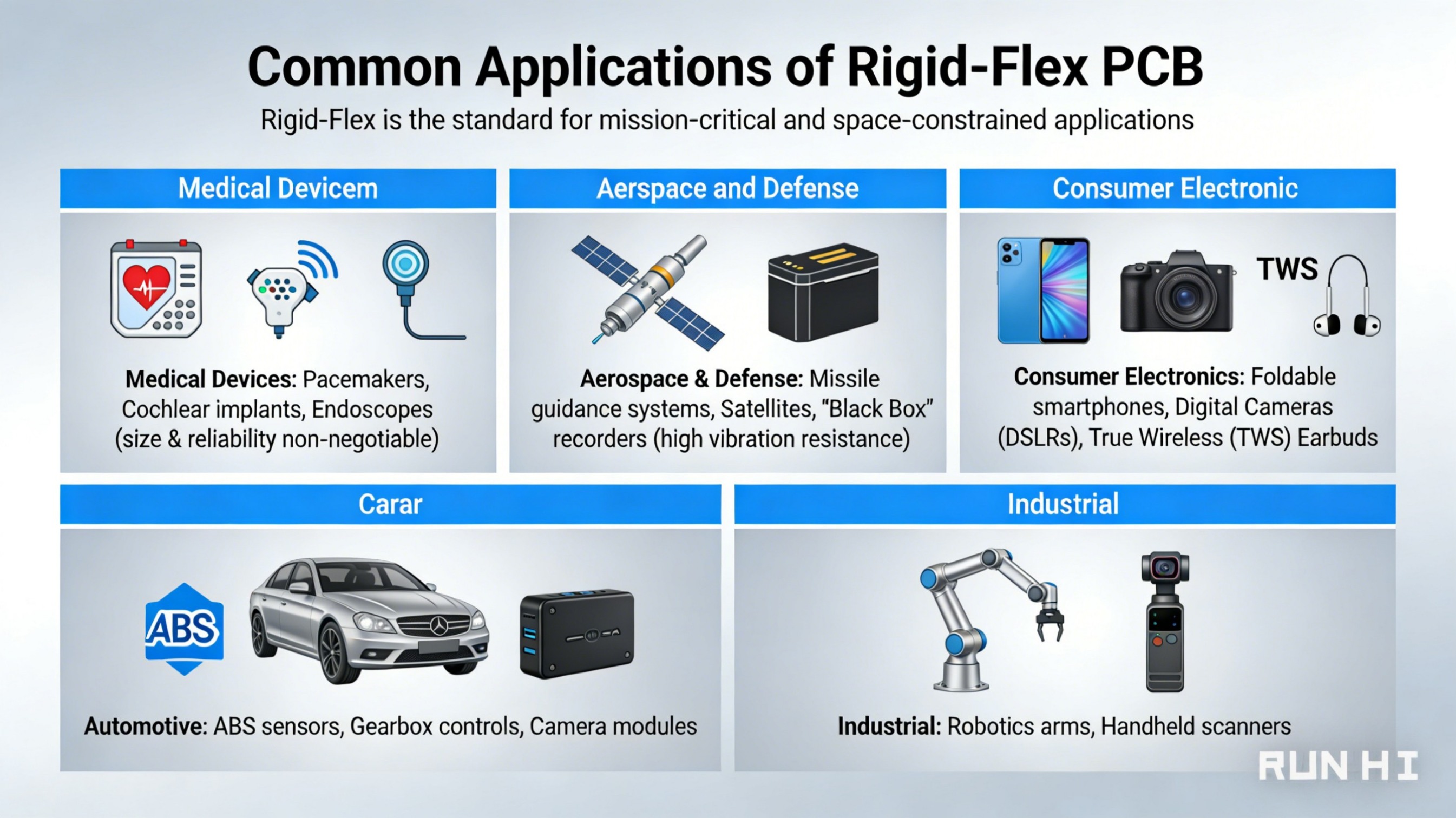
- Medical Devices: Pacemakers, Cochlear implants, Endoscopes (where size and reliability are non-negotiable).
- Aerospace & Defense: Missile guidance systems, Satellites, "Black Box" recorders (high vibration resistance).
- Consumer Electronics: Foldable smartphones, Digital Cameras (DSLRs), True Wireless (TWS) Earbuds.
- Automotive: ABS sensors, Gearbox controls, Camera modules.
- Industrial: Robotics arms, Handheld scanners.
Why Choose RUNHI as Your Rigid-Flex Manufacturer?
- Complex Lamination Expertise: We utilize advanced "No-Flow" Prepreg and specialized vacuum lamination cycles to prevent adhesive flow onto the flexible areas, ensuring perfect flexibility.
- HDI & Via Capability: We are experts in Any-Layer HDI, laser drilling, and copper plating on mixed materials, allowing for ultra-high-density designs.
- Material Science: We use high-performance Dupont Pyralux or Panasonic flexible laminates paired with High-Tg FR-4 to ensure the board survives multiple reflow soldering cycles without failure.
- Dynamic Flex Testing: For applications requiring frequent bending (like laptop hinges), we perform rigorous bend-cycle testing to guarantee fatigue resistance.
RUNHI Technical Capabilities (Rigid-Flex)
Feature | Capability Specification |
Layer Counts | 1-50 layers |
Base Material | High TG, FR-4 + Polyimide |
Board Thickness(mm) | 0.2mm-7mm |
Max board size(mm) | 570*670mm |
PCB size tolerance | ±0.2-0.3mm |
Min. Hole Size | 0.25mm |
Min. Trace/Space | 0.075mm(3mil) |
Copper Weight | 0.5-4oz |
Solder Mask Color | Green/Black/White/Red/Blue/Yellow |
Surface Finish | ENIG, HASL, OSP |